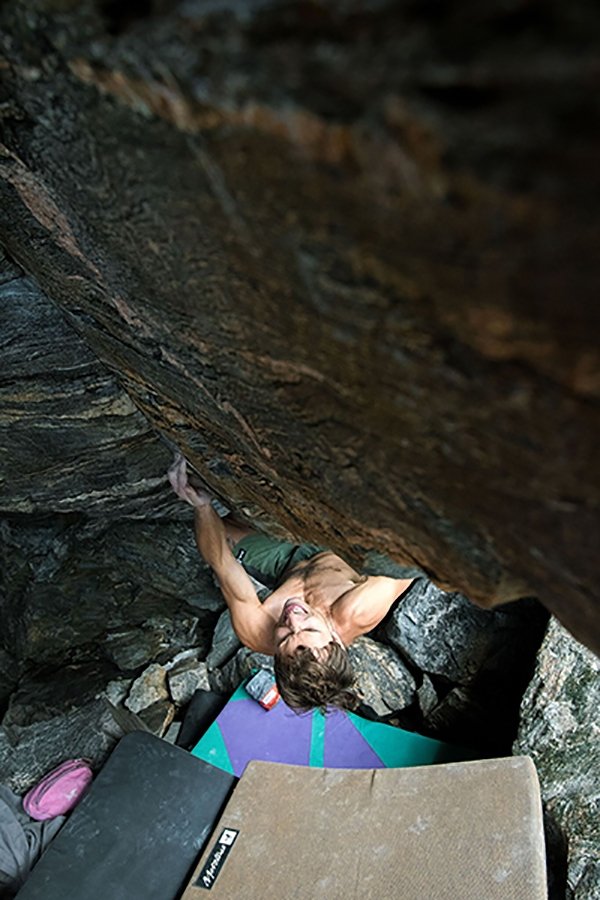
JON GLASSBERG — HOW TO CLIMB V15

Jon Glassberg bouldering in Fontainebleau France

Disclaimer: I have not climbed V15 … Yet. But, I am fairly certain I can. Here’s a recap from France…

— — —

My hypothesis: Any climber with an athletic disposition, dedication, time, appropriate training and proper diet can climb V10. Climbing double digits is an attainable goal for any serious climber. You just have to want it badly enough and put in the training hours to get there. 

As with any worthwhile goal, know that it’s not going to be easy. It will require sacrifice- but it’s possible. The same goes for me and my goal of climbing V15 before I get too fat, consumed with work, and “settle down.” I have been climbing in the V13 range for the past 8 years, but I have never taken the necessary steps to achieve the next level both mentally and physically. I recently made a conscious decision to achieve this seemingly impossible bouldering milestone. I can usually climb V12-V13 in a few sessions, so why not really dedicate myself to a project, and try to elevate my performance to achieve something greater? I mean, V15 didn’t even exist when I started climbing!

Here is my guide to climb V15 –a plan I made to provide a systematic approach to tick this elusive grade and place myself in the ranks of super-human, bouldering idols. If I can pull it off, it might just help you achieve your bouldering goals too:

Pick a Goal

Find a V15 (or a V-whatever) somewhere in the world that you think you can do. This is the scariest part of the process and it takes guts to share the idea with friends, because verbalizing your goals makes you accountable to them.

My choice? «The Big Island» (V15) in Fontainebleau, France. It’s my style, I have a partner to train and try it with, it gets me psyched, and IT’S RAD.

Jon Glassberg on The Island V15 in Fontainebleau France

Jon Glassberg working on «The Big Island» (V15).

Belief

Believe that you can do this climb, because you can.

This goes way, way farther than you can imagine. When I first envisioned this project, I could visualize the end goal but not the process it would take to get there. For me this meant sacrificing time, relationships, comfort, and money so I could be dedicated and single-minded. This is actually harder to do than I expected and you have to be mentally prepared to make those sacrifices from the beginning. For example, you might really love roping up every now and then. Stop! You’re a power-hungry boulderer now. Focus!

Training

Work with a trainer and get on a plan that will get you in top shape for your choice project. Find a partner to train with- you’ll need him or her for mental support, motivation, accountability and most of all, a little healthy competition.

Once I felt prepared to commit to the goal, it was time to get to work. First, I assembled a team: Steve Maisch agreed to train me, and Danny Ciavarro became my training partner. That’s really all you need: someone to give you a routine, to strive towards, and a partner with similar goals who is willing to put in the time by your side. Especially through those low self-esteem, depressing “I suck” moments.

My training plan was simple: 16-weeks designed to optimize power, compression strength, core strength, and injury prevention. I became hell bent on being able to do 5-7 incredibly hard, consecutive moves, and becoming a compression specialist. My workouts consisted of weighted hangs and weighted bouldering, interval bouldering, pyramid bouldering, and a core routine to balance my overall fitness, and injury prevention.

Here’s an example of one of my training weeks:

• Sunday: Weighted bouldering (climbing at my 75% max difficulty, with 10lb weight vest), weighted hangs, core routine
• Monday: Rest
• Tuesday: Boulder Pyramid: 10 up — 10 down (V5 to V11) in 1 hour
• Wednesday: Rest
• Thursday: Intervals, followed by projecting a boulder indoors (V13 range)
• Friday: Rest
• Saturday: Project an outdoor boulder (V13 range)

This routine required discipline, shrugging off stress on bad days, trying to chart long term progress, and keeping the sessions focused and intense. Seeing progress was key for me and I saw it the most on the sandbagged and notoriously difficult training tool, the Moonboard.

My first training session on the Moonboard looked like this: 
December 1, 2016: 5x V8s, 4x V9s

Three months later:
March 1, 2017: 6x V10s, 4x V11s

I gained huge confidence from such obvious gains and clear progression both mentally and physically.

Related:

JONATHAN SIEGRIST — BOULDERING IN RMNP 

BEN HARNDEN — SENDING THE SQUAMISH TRIFECTA

Jon Glassberg bouldering in Fontainebleau France

Diet

Seriously though. If you don’t eat well, your climbing will suffer.

I used to eat like shit and I knew it. Lots of sugars, carbohydrates. My diet was inconsistent; I skipped meals, and I didn’t eat for recovery. This needed to change if I ever wanted to level up, so I contacted my friend Neely Quinn (Nutrition Therapist, and host of the Training Beta Podcast) and begged her to fix me. She helped me form a meal strategy that was focused on high protein, high fat, and low carb. It worked. I lost 10lbs in the first 2 weeks and immediately felt the benefits of scheduled meals and better nutrition. I felt my power go through the roof. To boulder at my limit, that’s I wanted: POWER.

Rest

Force yourself to rest and listen to your body.

Arguably the hardest adjustment for me was learning to chill out. For the better part of 22 years, I have climbed as often as possible, usually 5 days a week, with an emphasis on volume. For my goals, this wasn’t the best strategy and I had no idea how beneficial rest could be until I started to see long-term effects. Listening to your body and taking extra rest days when you feel like you should is almost always the right move. It is remarkable what an extra rest day can do for your psyche, strength, and overall well-being. You won’t see big gains in strength if you climb all day, every day.

Proper Planning and Execution

Don’t compromise- be comfortable when you travel, allow yourself amenities and be selective when choosing partners.

While preparing for my trip to France to try «The Big Island,» I tried to be smart in anticipating my routine. I arranged a comfortable place to stay, lined up great partners, and booked my trip during the ideal season. Even if you do everything else right, neglecting one of these factors can sabotage your chances of success. To climb the hardest boulder problem of my life, everything else needed to be perfect.

Jon Glassberg bouldering in France

Conclusion

Most elite climbers in the V13 range can find a V15 project that suits them. With the right amount of training, dedication, and a little luck, it can happen. I asked myself- isn’t there one V15 somewhere that is your style, that would be doable for you given the right conditions? Why aren’t you going for it?

I used to hate projecting. It takes time, and with time you need mental strength. I went to Fontainebleau and put my training to the test. After my first few days on «The Big Island», I had only done half of the moves and was feeling pretty discouraged. After six serious sessions on the boulder, I had completed all the moves and done the boulder in two overlapping sections. That’s when I knew it was possible.

In the end, I left France without the elusive V15 tick BUT, I also left knowing that, one day, I could do the boulder. That realization is all I need to put in the time over the next year to return and send, and stand on top of this climb victorious. 

Essential Kit

• La Sportiva SKWAMA (new, with crisp edge) — S-Heel is ESSENTIAL
• La Sportiva SOLUTION PANT or CHICO SHORT (Flexibility is KEY)
• 3 pads — 2 Large, 1 Small
• Bouldering CHALK BUCKET

Until next time, I’ll be rehearsing the beta, over and over, and over.


«The Big Island» (V15) Beta

• Start right hand crimp, left hand crimp, left foot on best foot, right heel over hand just left of start hold.
• Cross right hand over to good crimp (feet stay the same).
• Slap left hand to arête (low) and right hand to sidepull quickly (don’t hesitate), left hand bumps to the “upsidedown”.
• Make sure you grab the “upsidedown” as upside-down as possible with thumb engaged.
• Right heel slides up to the “nipple” (best spot for heel on right rail, left toe slides up the wall slightly, away from best foot.
• Adjust left hand to maximize undercling with thumb.
• Big move to right hand sloper (get it down pulling or slightly side pulled).
• Keep right heel and swing left heel on to left side of wall (extended).
• Squeeze with inner thighs, try not to black out.
• Throw left hand to crimp (feels impossible, just go for it, you’ll stick it).
• Take a breath.
• Don’t move your feet and bump right hand to best part of side pull on sloper with index finger third knuckle resting on nipple.
• Squeeze like your life depends on it and slide right heel out to toe hook then slide same right heel to key right toe while keeping left heel engaged.
• Release left heel and squeeze holds into juice.
• Toss left hand to the lip with left foot dangling, not on any hold.
• Cut feet and heel hook lip with left foot.
• Left hand bump to sloper on middle section of lip.
• Right hand toss to visor sloper on the right side of the lip.
• Left hand back to jug.
• Right foot up to small crimp near crux sloper (Don’t fall here).
• Rock over heel.
• Top out.
• You did «The Big Island!» Celebrate with champagne.

JONATHAN SIEGRIST — BOULDERING IN RMNP

Jonathan Siegrist climbing "Whispers of Wisdom" (V10) at Emerald Lake in RMNP

Sport climber Jonathan Siegrist trains power through bouldering in RMNP during the summer off-season. 

— — — 

Sport climbing (with the occasional traditional route) was overwhelmingly my focus for nearly a decade. Through many cycles of systematic training, countless international trips and living in my truck traveling for climbing for five years, I had never been on a strict bouldering mission. Somewhere tucked away in my conscience I knew that a good bout of bouldering would likely be an incredible way to improve my climbing, albeit a total ass kicking. During the summer of 2015, with the short alpine season window looming, I decided to take the plunge. 

I knew that just trying to boulder as well as I could would not be a specific enough goal for me to succeed. I really wanted to fully adopt the bouldering mentality and focus, and to do so I needed to be seriously challenged. So I set an ambitious goal: try to climb 12 boulder problems V12 or harder in a month. Nothing more than the norm for an elite boulderer, for me, having done only two boulders this hard in 11 years of climbing (one of them being really soft…) I knew it would be a stretch. Living in Estes Park and hiking to Chaos Canyon nearly every day, I barely got it done, sending my final V12 or harder problem on the final day of the month allotment. I also relied on one of my few crossover assets (finger strength) for an ascent of «Jade» that summer, my first V14.

When I came back to routes after about six weeks of bouldering, I felt different. For one I felt hopelessly pumped! It was a depressing first few weeks to regaining fitness but on the up side I felt snappy and dynamic like never before. The things I learned about climbing from that summer carried over into my sport climbing that fall and beyond. Since that summer I have completely embraced the subtle and aggressive nature of bouldering in an attempt to improve my overall climbing and, if nothing else, get a change of scenery. 

Jonathan Siegrist squeezing up the compression block "Storm Shadow Sit" (V12) in Colorado's RMNP

Jonathan Siegrist climbing «Storm Shadow Sit» (V12) in Colorado’s Rocky Mountain National Park. Photo: Shaina Savoy

Since my initial experiment, I’ve incorporated bouldering for short periods over the summer season into my training for the last three years. I usually go full bouldering immersion during these periods, so no route climbing at all, and usually I will boulder five days a week. Often I will add in some additional training at the end of a bouldering day if I have energy left over. This can be some simple fingers stuff, or weight lifting. When it comes to working boulders, I am definitely going for new-to-me boulders and really just trying my hardest to do double digit boulders across styles; some longer, resistant boulders and some short ones too.

Last year I climbed some truly amazing park boulders like “Irreversible” (V13), “The Shining” (V13) and “Wheel of Chaos” (V13/14). “Gobot” (V11) actually took the most effort out of me, and was particularly satisfying. This summer I returned for some weeks to do “Storm Shadow Sit” (V12), “The Wheel Direct” (V13/14) and another personal nemesis “Whispers of Wisdom” (V10), among many others. 

So what can a sport climber learn from the boulderfield? Here are three things that I have learned over these last few years from my missions on the pebbles.My greatest take away is channeling aggression in the moment. For so many years I have learned that to be calm and relaxed is the way to send hard routes but when bouldering you need to be aggressive and access 101% of your ability in a single moment. It always takes me a week or more to remember this attitude, to truly try hard. To develop power, we need to release our full potential in an instant both mentally and physically. I love the feeling when I get this kind of ‘snap’ back and I have also used this skill on a rope many times to rage through hard cruxes. 

Bouldering is all about subtlety. I have learned so much about body positioning, body tension and even how to grab holds during my time bouldering. Minute changes in the way I set my feet or the way I grab a hold can easily make the difference between sending or not. I notice where I need to tense my body to keep my feet or hands on the wall, and where I can relax to get through difficult movement. The more I become aware of all of these little factors the more I can instinctually make the adjustments next time around. This has been hugely beneficial for figuring out crux sequences on routes. 

Jonathan Siegrist working "Memoirs of an Invisible Climber" (V11/12)

Jonathan Siegrist climbing «Memoirs of an Invisible Climber» (V11/12). Photo: Joe Segretti 

For me, when crossing over from routes, bouldering takes a lot of patience. I usually set a timer to make sure I get at least a five-minute rest between tries on a hard boulder because otherwise my power and strength deteriorate rapidly. Coming from a long session of sport cragging where you are either climbing or belaying nearly every minute of the day, to sit and recover after a 20-second try can be arduous. However, patience is an enormous asset in every aspect of climbing (save maybe speed climbing) and the in-between times always help me appreciate the beautiful environment I’m in. Sometimes I even rest up to 15 minutes between tries on a longer boulder. 

There is much more to take away from a season of bouldering but I hope this is enough to convince some of you die-hard sport fanatics out there to take a month and haul a pad up to the boulderfield. Watch some lifelong boulderers and see how they do it, enjoy the absence of ropes and gear, and try as hard as you can. Oh, and lastly, remember to land on the pad!

10 NATIONAL FORESTS WITH INCREDIBLE TRAIL RUNNING

A section of the North Country Trail running through Allegheny National Forest

From Alaska to the southeast, our National Forests offer some of the best trail running opportunities. 

— — —

The National Forest System in the United States includes 193 million acres of public land, accounting for about 8.5 percent of our country. While the national forest distinction was originally created in the wake of the 1891 General Revision Act to protect local watersheds and sustain timber supplies, these days the United States boasts more than 150 national forests across 40 states. With tons of trail running- through lush greenery, along bluffs and gorges, and past red sandstone formations- it’s no surprise that these protected lands are home to some of the nation’s best trail running and hiking opportunities. Here are 10 suggestions to get you started.

1. Allegheny National Forest, Pennsylvania

Originally used mostly for hunting and fishing, dozens of facilities were built in Allegheny, Pennsylvania’s only national forest, in the 1930s by the Civilian Conservation Corps. Today this 800-square-mile slice of the Appalachian foothills is home to plenty of recreational opportunities, including prime trail running. The highlight here is a 95-mile section of the NORTH COUNTRY TRAIL, with access points within the forest where you can jump on to put in a few miles. Depending on where you start you might see remnants of the area’s oil and logging past, cruise through the scenic Minister Creek Valley, or have views of the Allegheny Reservoir. Keep your eyes peeled for wildlife like bears, deer, coyotes, bobcats, and eagles.

La Sportiva Recommends:

The HELIOS 2.0 is a good option for running on the North Country Trail, especially if you like a lightweight, neutral shoe that fairs well on all but the most technical terrain.

2. Pisgah National Forest, North Carolina

Mount Mitchell became North Carolina's first state park in 1915.

With more than 800 square miles of rugged mountain terrain in North Carolina’s Appalachian Mountains, PISGAH NATIONAL FOREST contains hundreds of miles of trails. American forestry as we know it today has its roots in Pisgah, where the Biltmore Forest School (the first of its kind) was established in the late 19th century. Today, the Grandfather and Appalachian Ranger Districts offer the highest concentrations of runs in Pisgah. For a serious challenge, take the rugged 11.9-mile Black Mountain Crest Trail to the summit of Mount Mitchell. Following the ridgeline you’ll climb a handful of peaks over 6,000 feet, accompanied by unimpeded views of the surrounding mountains and valleys.

La Sportiva Recommends:

The Black Mountain Crest Trail serves up challenging hills and some technical terrain, so you’ll want a sticky sole with good ankle support, like the BUSHIDO.

3. Ozark National Forest, Arkansas

The Pedestal Rocks are among the Ozarks' coolest formations

The OZARK NATIONAL FOREST, along with its counterpart the St. Francis National Forest, has more than 300 miles of trails, including a hike to Arkansas’s highest point, Mount Magazine. Hiking and running in Ozark and St. Francis National Forests afford views of tall sandstone bluffs, deep gorges, and, if you time your trip right, incredible fall foliage. The partner forests cover more than 1,800 square miles, offering tons of accessible trail running options. The PEDESTAL ROCKS and Kings Bluff Loops, both in the Bayou Ranger District, are short and sweet, offering up-close views of the area’s famous cliffs.

La Sportiva Recommends:

A decent, all-around trail runner is a good choice for exploring the Ozarks. The AKASHA promotes heel-to-toe motion in your foot, while providing cushion, durability and flexibility. 

4. Carson National Forest, New Mexico

Carson National Forest is full of five-star views.

Named for legendary American frontiersman Kit Carson, this 2,200-square-mile NATIONAL FOREST in northern New Mexico is home to the state’s highest peak, plus five designated wilderness areas. Trails in Carson are known for a lot of vertical gain over long, moderate grades and many of the best running trails cut through dramatic scenery: think craggy cliffs, scenic meadows, and alpine lakes. For a decent run with five-star views of the second-highest point in New Mexico, head up the 5.5-mile out-and-back TRAMPAS LAKES TRAIL.

La Sportiva Recommends:

Because this isn’t your traditional, soft-packed forest trail kind of place, there’s lots of loose dirt and rocks that could get into your shoe. Try the HELIOS SR—it’s well-ventilated (a good feature to have in the heat) and the sticky rubber sole performs well on loose gravel.

5. White River National Forest, Colorado

You’ll find some of Colorado’s most iconic views in the gorgeous Maroon Bells-Snowmass Wilderness

At nearly 3,600 square miles, this enormous national forest is host to stand-out features including eight wilderness areas, 12 ski areas, and 10 fourteeners. With more than 2,500 miles of trails, White River is a mountain runner’s paradise with first class options in the MAROON BELLS-SNOWMASS WILDERNESS area, and the 27-mile FOUR PASS LOOP which summits four 12,000+ foot peaks, gaining more than 8,000 feet along the way. One of the most sought-after runs in Colorado, runners flock to Four Pass to catch the leaves bursting into shades of yellow, orange, and red in the fall.

La Sportiva Recommends:

For serious mountain running, you’ll want a shoe that is durable and supportive, but with enough cushioning to protect your feet from any rocks you might come across. The AKYRA is secure-fitting and stable to keep your stride steady.

6. Coconino National Forest, Arizona

Coconino National Forest features desert views and red rock formations

Covering almost 3,000 square miles of high desert on the Colorado Plateau, the COCONINO NATIONAL FOREST is home to dense stands of ponderosa pine, Sedona’s famous red rock formations, and quintessential southwestern desert trails. Of the hundreds of miles of trail in Coconino, don’t miss the half-mile route out to the Montezuma Well, a collapsed limestone sinkhole, or the 4.5-mile trail up to the heart-stopping DEVIL’S BRIDGE. History buffs will delight in the many ruins left behind by Ancestral Puebloans who once lived in the area, including dwellings built into the sides of the cliffs.

La Sportiva Recommends:

Wherever there is red sandstone, you’ll likely go home with red-stained socks. The MUTANT solves that problem with Spyraltongue™ technology for a glove-like fit around the ankle and the top of the foot, which helps keep sand out.

7. Angeles National Forest, California

The view on the trail to Mount Wilson

Just 20-odd miles north of bustling Los Angeles, California’s first national forest is also a historical landmark. Angeles National Forest protects 1,000 plus square miles of the Sierra Pelona and San Gabriel Mountains and features 700 plus miles of trails. One of Angeles’ best-loved trail runs is the challenging 13-mile out-and-back up MOUNT WILSON, whose summit features an astronomical observatory of the same name. Check out the MOUNT DISAPPOINTMENT 50K COURSE, for a longer run and bag some other local peaks.

La Sportiva Recommends:

The routes are steep, but not particularly technical, so a well-cushioned shoe with ProTechTion™ reinforcements like the AKASHA will give you the support needed for longer distances.

8. Fremont-Winema National Forest, Oregon

In 2002, Oregon’s Fremont and Winema National Forests merged to create 3,500 square miles of jointly managed public land. With few sizeable towns nearby, Fremont-Winema offers a chance to experience remote wilderness, from snowy alpine tundra ecosystems to sage-filled basins. It’s also home to the approximately 175-mile FREMONT NATIONAL RECREATION TRAIL, with incredible views of Mount Shasta and the Cascade Range. This forest is also one of the best for spotting birds, as it’s situated near major migratory flyways.

La Sportiva Recommends:

If you’re romping around through water and potentially snow, you’ll want either a waterproof shoe or something that is lightweight and dries quickly. The CROSSOVER 2.0 GTX offers a waterproof option with built-in gaiter, while the HELIOS 2.0 provides a lightweight and quick drying minimal option. 

9. Olympic National Forest, Washington

From temperate rainforest to craggy peaks, Olympic National Forest has it all.

This 981-square-mile NATIONAL FOREST, which nearly surrounds Olympic National Park, was established as a forest reserve in the late 19th century. From temperate rainforest to craggy peaks, Olympic covers a huge range of environments lending a wide range to the local trail running opportunities. Plenty of trails criss-cross the forest and designated wilderness areas, but the highest concentration (and most popular) are in the Buckhorn Wilderness. With creek crossings, alpine meadows, and views of nearby peaks, the 14.4-mile out-and-back to Royal Basin is not to be missed.

La Sportiva Recommends:

The Pacific Northwest is known for being wet making a pair of quick-drying, waterproof shoes a must. The WILDCAT 2.0 GTX has a waterproof Gore-Tex liner, as well as the stability and traction that you need to hit serious trails.

10. Chugach National Forest, Alaska

 Mountains, glaciers, ocean, and forest: there’s no shortage of adventure in Chugach National Forest.

Clocking in at 10,800 square miles, this behemoth national forest covers a swath of land on Alaska’s Kenai Peninsula along the Prince William Sound. It’s among the wildest landscapes you’ll find anywhere in North America, and is larger than the state of New Hampshire. Countless miles of trail are accessible from Anchorage, but among the best and most scenic runs is the RESURRECTION PASS TRAIL. You can thru-hike or run as much or as little of the 39-mile Res Pass as you’d like—for the distance, the trail isn’t very strenuous. The route from Hope to Cooper Landing runs by countless alpine lakes, megafauna, and its seven-mile-long namesake pass.

FASTPACKING — HOW TO GET STARTED

La Sportiva Blade GTX

Intended for traveling long, fast and light, fastpacking lets you cover more ground than backpacking…

— — — 

While ultra running has rocketed into the mainstream, and thru-hiking books earn places on the bestseller list, fastpackers can be found loping along a distant trail, far away from the crowds.

“Fastpacking exists in the space between ultra running and backpacking” says experienced fastpacker and adventure runner JUSTIN SIMONI. “Like backpacking, you bring along a pack filled with essentials for an extended trip like food, extra clothes, and maybe a simple sleep system. This gear allows you to travel over a longer distance than you could by just running unsupported, while keeping the gear light enables you to move quickly and efficiently, similar to running.”

The beauty of this activity lies in its simplicity: load a small amount of gear, food, and water on your back and tackle a multi-day route in the backcountry through a combination of hiking and running.

Justin Simoni during his Highest Hundred Tour, standing on Jagged Mountain

Justin Simoni standing on Jagged Mountain during his Highest Hundred Tour.

“Fastpacking isn’t for every outing though. Sometimes you want to take it easy, set up camp, and enjoy a particular area. That’s when backpacking shines. Sometimes you just want to crush through a workout. That’s when you want to go for a really fast run.” Says Simoni, adding that he opts for fast packing, “when I want to tag multiple mountain summits in an area at one time, without needing to take multiple trips. If you’re squeezed for time, fastpacking can really help maximize an adventure. I find it very rewarding to cover so much distance with minimal gear.”

Packing ultralight means there’s no room for error. Fastpacking is not for the novice—you’ll need the skills necessary for backcountry travel and, more importantly, navigation. The right physical preparation, knowledge, and gear can be the difference between an Instagram-worthy epic, and a brutalizing slog.

Here are a few tips to get more comfortable fastpacking.

SAFETY

When traveling fast-and-light, SAFETY needs to be a top priority. Always carry a map, a real-time gps device, and be knowledgeable about the terrain, wildlife, and access to water along your route.

Leave your itinerary with a reliable friend or family member, and let them know once you’ve made it safely back to your car. Plan your route in accordance with your skill set, and be willing to bail if conditions go south.

Don’t skip basic safety gear. A fire starter, compass, and first aid kit should have a permanent home in your pack. In addition to these, many backcountry travelers choose to carry a personal locator beacon.

FITNESS

Aspiring fastpackers should use running and hiking as a means for building fitness, and as practice to get your gear kit dialed. Get out for some trail running and hiking (with a pack) a few times a week, with one of those days being dedicated to a long run, or hike with a heavy pack. Simoni advises entry-level fastpackers to test the waters with “a few long, all-day packs with your chosen gear—allowing you to dial in your sleep system, food preference, and gear choice.”

Once you have your gear dialed, “Try your setup on a long out-and-back route you’re familiar with, so that you can turn around and head out if something’s not working properly or if the weather turns into something you’re not ready to deal with safely. I prefer hiking up a mountain, as the return is always faster! Grab a buddy and set up a shuttle between two segments of a long-distance trail (like the Colorado Trail) and try an overnight fastpack between the two trailheads you’ve parked at. That’ll give you a good idea of how compatible your gear is with your running and hiking style, how well you’re sleeping, what foods are working out for you, and how your body is holding up to back-to-back long, hard days.”

If you don’t live in a mountainous area or have limited access to trails, don’t worry. There are plenty of ways to build up your fitness for fastpacking, the first of which is running uphill. Hill repeats will supercharge your cardiovascular system, and are great for building strength in the glutes and hamstrings. To start, find a hill at least a quarter of a mile long. Run to the top and then jog or walk back down to the bottom. Start at five repeats per workout. As you build your fitness and strength, look for longer hills or add more reps (If you’re truly a flatlander, running up parking garages is a great way to simulate hilly terrain, or set your treadmill at an angle).

In addition to running uphill, a regular gym routine can help. Weighted strength training is especially important if you have a running background (vs. a hiking background) since you are less accustomed to carrying a load over many miles. Using a few key lifts, such as squats, deadlifts, and lunges will help build valuable leg and lower back strength. Focus on moderate reps, (6-10 per set) with loads around 30-60 percent of body weight. Even two, 30-minute sessions a week can dramatically increase your strength, resulting in less fatigue and reducing the likelihood of injury.

GEAR

It’s hard to go fast if you’re weighed down by extra gear, but you still need to be prepared to face the conditions you’ll encounter. By eliminating duplicates and learning what you can go without, you can drastically downsize your load.

Pack Your pack choice depends on how prepared you feel, the distance and expected duration of your route, and how much you think you need to bring. Most fastpacks range from 15 to 40 liters, and as fastpacking has become more popular, more ultralight options are available. Most packs designed for fastpacking do not have hydration bladders built it, but you can easily add your own into the bag. They also don’t have a structured frame like most multi-day backpacks, but some have at least a (removable) foam frame.

When it comes to fitting a pack, Simoni says it’s important “to see if you’re pack is runnable since, even if you’re loaded down, you should want to try to run some of the easier parts of the trail. A pack that rides too low, or sways too much with weight in it just won’t work out well, and you’ll be miserable.”

Clothing Layering is key to accommodating the changing temperatures from morning to night, and managing body heat. During the day, Simoni sticks to typical TRAIL RUNNING ATTIRE but makes sure to bring along “a rain jacket and some layers for when it gets cold at night. I usually bring a wool base layer and a puffy jacket at minimum.” For socks, look for wool or technical fabrics. For shoes, there are plenty of lightweight options that also offer waterproof protection, such as THE BLADE GTX. (Always wear your shoes on shorter hikes or at least around the house a couple times before going for a multi-day trip!)

A light bivy set-up

Sleeping System and Shelter Your sleep system excompasses your sleeping pad and bag combo. Many fastpackers opt for quilts instead of full bags (depending on the weather) in an effort to shave ounces, and if you’re serious about getting pack weight down, go for a short or half-length sleeping pad, using your empty backpack to rest your legs and feet on while you sleep. If you’re confident cowboy camping (i.e., sans shelter) and have a clear weather forecast, just bring a ground cloth to sleep on. Conversely, if there is a chance of rain during your trip, you can sleep under a tarp. Simoni’s sleep and shelter system includes, “a lightweight 800 fill down bag, a warm but light pad, and a bivy, like the Ultimate Direction FK Bivy.”

•Water As with any outdoor adventure, hydration is essential. A good rule of thumb is to start with two liters each day. You will not be able to bring enough for the entire trip, so you’ll also have to plan to replenish your water supply. Look for towns along your trail to refill at, but most likely you’ll be refilling water from a stream or snowmelt, using a filter or purification tablets.

•Trekking Poles Many fastpackers use poles to help reduce fatigue during long days—they’re beneficial in helping you power up steep climbs, and protecting your knees on gnarly descents.

Gear choices are also highly personal and location dependent. Only you can know how many layers you need to stay warm at night, if you require a stove for warm food or can go without, and if the weather calls for a down jacket or not. Purchasing lighter gear when possible will help keep your pack weight down. You should also look to eliminate small comforts that add up to extra pounds on your back (leave your camp shoes and e-reader at home!)

Most fastpackers opt for trekking poles

PUTTING IT ALL TOGETHER

When making route decisions, consider the amount of time you have, the distance you feel comfortable covering and your fitness level. A good place to start is a well-maintained trail that you’ve hiked before and are familiar with. Factor in seasonal weather patterns (i.e. Colorado is known for summer lightning storms in the mountains) the elevation gain, and altitude (in some cases). Last, but not least, always tell someone where you are going and when you plan to be back.

CLARE GALLAGHER — WINTER RUNNING ≠ SUMMER RUNNING

Clare Gallagher running in Boulder's Chataqua park.

“How do you train throughout the winter?” Clare Gallagher talks cold weather motivation and training…

— — —

First, let’s be clear on my relationship with winter; I’m no snow queen nor balaclava connoisseur, I get cold easily and my muscles are quick to tense up. On any given day, I’d take 90 degrees over 15 degrees.

Fortunately, I live in Boulder and the winters here, along with the rest of Colorado’s Front Range, are comically mild compared to the Midwest, the Northeast, and most all mountain towns. On top of that, we have generous sunshine, AMPLE TRAILS, and an overwhelmingly motivated running community.

Still, I have trouble with winter’s volatility. This is funny, considering I’m mildly manic at my most relaxed, but I suppose my mania just can’t handle the ups and downs inherent in winter running. I think it’s the teasing that gets me. For example, January in Boulder is littered with days boasting temperatures in the upper 50’s. But, those days are often followed by snow and 10-degree days. Then, it will be sunny again. The snow will melt and turn to slush. Within days, that slush turns to ice. Then, you slip on the ice. You scream. You hate winter running. Winter running is the stupidest thing ever. But then, the mercury creeps back into the 50’s, the sun makes an appearance, and you’re running in a sports bra again. What gives?

"Winter" up to its usual tricks in Boulder, CO.

Since my love for all running overwhelms my disdain for winter running, I’ve developed a winter warrior mentality. I treat the entirety of cold weather and icky conditions like they’re all part of a long, slow-burning ULTRAMARTHON. And the ultimate success? Summer. I won’t let spring fool me. In Colorado, spring is often just the halfway mark.

Alright, so how do I deal with winter?

Treat each day like it’s just one baby step in a long race.

Think small. Think only of the next run. If I thought about the slew of upcoming, freezing-cold days, I’d give myself a hernia. But if I think about tackling just one itty bitty hour-long run, albeit in freezing conditions, I can handle it. Everyone can handle just one run, right?

Only the present run matters, but you better be prepared.

Before heading out, I’ll check the outside temperature. That allows me to plan my outfit. One, two, or three top LAYERS? Fleece tights, lightweight TIGHTS, or shorts? GLOVES or ski mittens? It also gives me wiggle room to switch my run plans. If it’s snowing and there’s sure to be black ice on the bike paths, I’ll run on the trails with traction (usually stowing a pair of microspikes in my belt pouch to use on any seriously icy sections that stay shaded). If my motivation is lagging, or I’m feeling anxious about the cold, I’ll overdress. Sweating out two layers is surprisingly cathartic, as long as you don’t run long enough for your sweat to freeze.

Embrace the (ample) Type II fun.

Let’s be honest: some days will not be fun. There will be a frustrating amount of ice everywhere. On these days, my ultra-race mentality (aka winter warrior) mindset will emerge. I’ll over-prepare. I’ll purposely schedule a run with a friend so I don’t chicken out. Or I’ll look forward to listening to a podcast about the world’s state of affairs. That way when I start to complain about how awful my run is, I’ll remember that I’m one of the most fortunate people alive because I get to run. Period. And a week later, I’ll only remember how fun it was to run through 12 inches of brand new snow.

Embrace the slush and slop of winter running—it's temporary!

Winter Training Week

Here’s a typical week’s training snippet from my past two months. It’s been a classic Colorado winter with the whole sun, snow and ice charade. I’ve been training for an end-of-March 50KM RACE IN THE CINQUE TERRE, ITALY. Like many ultras, this winter hasn’t been pretty. But every moment of sun has made the tougher moments so worth it. 

•Monday: Off—no running. I like to start my week off with my clearest intentions: prevent injury, don’t overtrain, embrace rest. My coach, David Roche, champions this habit. This usually means I’m SKIING UPHILL LAPS at a resort before the lifts open, or I’m honing in my V1 climbing skills at the gym. Or, if I’m being really good and honest, I’m not exercising at all.

•Tuesday: Easy hour to 90-minute run. I often plan my Tuesday run on Monday night by scheduling to run with a friend because I anticipate snow or cold, or just plain lethargy after taking a day off.

•Wednesday: Workout. Coming off a two-month off-season with no hard efforts, my workouts started slowly this winter, with short speed sessions gradually moving to tempos and hill workouts. Each workout starts with a 20-30 minute warm-up and 10-20 minute cool-down of easy running. In winter, warming up properly is essential; the cold makes injuries like a strained hamstring—or strained anything—from being too tight before working your muscles hard more likely. A cool down is also important (especially in the cold season because you will likely be immobile afterwards, so you want to let your muscles literally relax and cool down before stopping movement).

A classic speed session is 10 x 1 minute of hard effort with 1 minute of rest between reps. I’ll do these with a buddy or alone, usually on a bike path.

As my next race has gotten closer, I’ve done more hill workouts, like 5 x 3 minutes hard uphill, with equal rest between reps. I did this workout on a packed-down snowy trail in Boulder, but there were a few sections of slippery slush and ice. I didn’t fret about my pace during the repeats because calmly trudging forward in adverse conditions was perfect mental practice, in addition to the physiological benefit of running hills.

I wore the LYCANS for this workout (and pretty much every trail run since they came out. They are without question the best trail shoe I’ve worn because they’re grippy, stable, but still light enough to run fast on buffed out trails.)

•Thursday: Same as Tuesday. Sometimes I’ll ‘adventure double,’ which means I’m crushing the winter warrior mentality and find the stoke to run again at night. If I do a second run, it’s never more than six miles.

•Friday: Another workout like Wednesday, or the same easy mode as Tuesday and Thursday. Since I’ve been dealing with tight hamstrings all winter, I usually skip a second workout in lieu of having a better weekend.

•Saturday: Long backcountry ski or long run. If I’m up high where there’s big girl snow for the weekend, I’ll skip a run and just ski. If I’m down in Boulder, I’ll run anywhere from 10 to 25 miles on trails. A few weeks ago, I got the best treat ever on one such long run: shorts and a t-shirt!

•Sunday: Ski or easy hour to 90-minute run. All depends on my location and stoke level.

GETTING OUT IN BOULDER — TOP 8 TRAILS

The La Sportiva FC 4.1 is an eco-friendly boot that offers protection and comfort for all hiking distances.

With open plains giving way to high peaks, Boulder’s hiking trails cover beautiful and varied terrain. 

— — —

The views from atop Boulder’s highest peaks show how the amazing landscape that has shaped the Rocky Mountains presents itself in two different worlds. To the east, the land is a flat, tawny expanse of sprawling prairie that meets the sky in a horizon line as flat as a level. In contrast, western views look out onto the snow-capped mountains of the Front Range, a collection of summits that alternate between massive, rounded domes and harsh, jagged spires. Boulder’s foothills serve as altars between these geographic marvels, transitioning from the high plains to the first uplifted contours of America’s most famous mountain range.

We’ve put together a list of 8 hikes that showcase the beauty and diversity surrounding Boulder, Colorado. Lace up a pair of the FC 4.1 and get started; these versatile, eco-friendly, workhorse hikers fit the bill for the varied terrain found on these Front Range trails. 

GREEN MOUNTAIN

The summit placard marking the 8,150 apex of Green Mountain

At 8,150 feet, Green Mountain is one of a trio of peaks that extend above the city’s famous Flatirons- a series of exposed slabby faces visible from downtown. Several trails lead to Green’s summit with the most popular routes starting at Gregory Canyon. The Amphitheater Trail begins with an abrupt stone staircase that bypasses the namesake rock alcove before heading up through pine forests, where semi-open views preclude the exposed summit overlook. From the same starting point, Gregory Canyon Trail follows more open rock outcroppings than the Amphitheater and may be a more desirable summit approach for runners looking for a challenge. A sturdy stone cairn topped with a brass plate identifying the distant peaks is mounted on the summit boulder.

•Round Trip Distance: 6mi // Elevation Gain: 2,867ft

BEAR PEAK

Choose from two routes to tackle the 8,460-foot Bear Peak; both start from the NCAR (National Center for Atmospheric Research) parking lot—and combined they form an excellent loop. From NCAR, head to the Mesa Trail then up Fern Canyon. This trail follows the shadowy, steep canyon with askew boulders lining the trail. After a steady climb, the iron-rich spine of red rock that makes up Bear Peak’s exposed summit comes into view. A brief but exciting scramble leads to the top, where Boulder’s most open summit views await. Descend via the West Ridge Trail through the remnants of a burn zone that fades into lush alpine meadows before reconnecting with the Mesa Trail, closing the loop.

•Round Trip Distance: 7.7mi // Elevation Gain: 3,018ft

SOUTH BOULDER PEAK

South Boulder Peak is the highest point in the Boulder Mountain Parks region (8,549 ft.) yet this out-and-back isn’t as popular a hike as its neighboring summits of Green Mountain and Bear Peak. Fewer crowds means that hikers often have the summit to themselves. Views to the east are hindered by pine trees but are open and expansive to the west. Linking Bear Peak and South Boulder peak only takes about 30 minutes and the two mountains share a common trailhead at Shadow Canyon/South Mesa Trailhead. For a robust day, hiking all three mountains (South Boulder-Bear-Green) is a classic adventure both as a loop and as a point-to-point from South Mesa Trailhead to Gregory Canyon.•Round Trip Distance: 7.8mi // Elevation Gain: 3,090ft


MOUNT SANITAS (LION’S LAIR TRAIL)

If Boulder were to designate a hometown mountain, Sanitas would be it. It can be a busy place on summer weekends when hikers, joggers, canine companions, and photographers converge on the modest 6,843-foot peak. The addition of the smoothly-graded out-and-back Lion’s Lair Trail in 2014 from the western approach in Sunshine Canyon has helped disperse foot traffic on the mountain while offering one of the best trail running paths in the city. (Note: Parking for the Lion’s Lair trailhead is limited.) The east side trails from Linden Avenue and Mapleton Avenue are steep, sturdy, and scenic. The access is approachable, the views are spectacular, and a round-trip hike can be done in just over an hour—or longer if you want to make a loop. Settlers Park, Boulder’s Red Rocks Park, and nearby Pearl Street are all a short distance from Mount Sanitas.

•Round Trip Distance: 4.5mi // Elevation Gain: 987ft

MARSHALL MESA

The plains surrounding Boulder offer wide open views of the foothills that frame the town from the west

Rather than offering airy summit views, Marshall Mesa’s eastern locale affords it some of the very best, wide-open views of Boulder’s iconic landmarks from the vantage point of the plains. A network of trails cover the rolling terrain while offering optimal vistas of the Flatirons to the west. To the north, views of the city and Boulder Valley sprawl to the foothills and off in the far distance, Longs Peak looms. Marshall Mesa is a peaceful place to admire Boulder from afar and it can be accessed by two main trailheads off CO 93: Marshall Mesa Trailhead and the Greenbelt Plateau Trailhead, or for a longer route from the Doudy Draw Trailhead (via the Community Ditch Trail). Keep an eye out rattlesnakes in the summer!

•Round Trip Distance: Distances vary // Elevation Gain: Varied; relatively flat

BOULDER VALLEY RANCH: SAGE LOLLIPOP LOOP

Located on the outskirts of north Boulder, this loop harkens back to the city’s agrarian roots. The Sage Loop circles Boulder Valley Ranch, a still working farm in the middle of open space. Just following the loop is right at three miles while the addition of a short spur adds a little extra distance. Views of the city to the south are blocked by a small mesa, making it feel like you are much farther away from the urban bustle than you actually are. Old cottonwood trees line the irrigation ditch that opens up to the grassy meadows, where cows and horses graze. Those looking to increase their mileage can walk via the Eagle Trail and dirt roads to Boulder Reservoir or detour up to the mesa through a network of single-track trails.

•Round Trip Distance: 3.75mi // Elevation Gain: 123ft

DOWDY DRAW/COMMUNITY DITCH/FLATIRONS VISTA

Parking at the Doudy Draw Trailhead, this seven-mile loop starts with a short section of low-grade gradual climbing up the Doudy Draw intro section to reach the split for the Community Ditch Trail. Following this leg to Foothills Parkway/ Highway 93 leads to an underpass to gain the Greebelt Plateau Trail, bringing runners or hikers out onto the exposed plains with scenic views of the foothills and Eldorado Canyon. Eventually crossing Highway 93 again to link up with the Flatirons Vista North Trail, the trail then cuts back west and rejoins Doudy Draw. Dowdy Draw sees less traffic than the neighboring South Mesa Trail, though some of that is in the form of mountain bikers. For a shorter, more shaded option, take Doudy Draw to the Spring Brook North/ South Loop, a loop that courses through pine groves along a narrow trail over rocky footing. This area is especially pleasant during the winter months when cooler temperatures offer relief from the otherwise exposed (and hot) sections on the plains.  

•Round Trip Distance: 7mi // Elevation Gain: 400ft

WALKER RANCH

Situated behind Flagstaff Mountain, Walker Valley Ranch offers a challenging loop to runners, mountain bikers and hikers alike

Walker Ranch is a 7.5 -mile loop located about 20 miles west of Chautauqua Park, up and over Flagstaff Road. The trail can be hiked in either direction and starts near the highest point of the route. Descend to South Boulder Creek before encountering a steep, 200-foot tall stone staircase near the halfway point of the trail. There are burn zones, open meadows, a trickling creek and quiet forests to explore along the way. It’s also a good place to see the western faces of Bear and South Boulder Peaks. Be alert to mountain bikers sharing the trail!

•Round Trip Distance: 7.5mi // Elevation Gain: 1938ft

GETTING OUT IN SEATTLE — TOP 10 TRAILS

Hiking in Seattle

Ten trails for hikers or runners that show off the lush forests and rocky summits surrounding Seattle…

— — —

Verdant forests, pristine alpine lakes, jagged peaks, and water in almost every direction; the stunning geography of the Pacific Northwest lends itself to a wide variety of hikes within easy access from Seattle. Narrow down the options with our guide to the 10 day-trip worthy trails from the city.

DISCOVERY PARK

La Sportiva FC 4.1 GTX

The women’s-specific La Sportiva FC 4.1 GTX is a versatile and eco-friendly boot ready to hit the trails. 

Seattle’s largest and most beloved park, Discovery Park is proof that you don’t need to leave the city limits to spend quality time outside. The 2.8-mile Discovery Park Loop travels through forests and meadows, and past bluffs that look out onto extraordinary views of Mount Rainier and the Olympics across the waters of Puget Sound. It’s worth extending the journey by taking the trail down to the beach where you can stroll along the shores or picnic near the lighthouse.

Roundtrip Distance: 2.8mi // Elevation Gain: 140ft

COUGAR MOUNTAIN

Cougar Mountain

The COUGAR MOUNTAIN REGIONAL WILDLAND PARK is a forested gem nestled in the “Issaquah Alps.” A 30-minute drive from downtown Seattle allows runners and hikers quick access to the park’s network of trails, totaling 36 miles that meander through mosses, ferns, and conifers, and covers plenty of ground to provide variety for repeat visitors.

Roundtrip Distance: Distances Vary // Elevation Gain: Elevation Varies

POO-POO POINT

The view from Poo Poo Point

Located on the flanks of Tiger Mountain (Cougar Mountain’s neighbor), Poo-Poo Point is another easily accessible and undeniably scenic jaunt. The route is 7.2 miles round-trip with 1,858 feet of elevation gain to the top, where you’ll be treated to views of the Issaquah Valley, Lake Sammamish, and the Cascades. On a calm day, you may even get to see paragliders soar off from the launch pad.

Roundtrip Distance: 7.2mi // Elevation Gain: 1,858ft

MOUNT SI

Mount Si is a testament to the grit of Seattle-area hikers. Despite the trek’s more strenuous nature—ascending 3,150 feet over four miles—Si’s summit is the most popular hiking destination in Washington. It’s not hard to see why the trail is so popular; after winding through verdant Pacific Northwest forests and meadows, bursting with wildflowers in the spring, it delivers you to a steep scramble to the top, surrounded by views of the Olympic Mountains and Seattle.

Roundtrip Distance: 7.6mi // Elevation Gain: 3,150ft

RATTLESNAKE LEDGE

Rattlesnake Ledge Trail

Like Mount Si, Rattlesnake Ledge is another popular hike in the I-90 corridor that extends east of Seattle. The trail also offers some climbing: 1,160 feet over two miles. The endpoint is a large, open rocky area on the east ridge of Rattlesnake Mountain that offers stunning vistas in all directions.

Roundtrip Distance: 4mi // Elevation Gain: 1,160ft

MOUNT PILCHUCK

The 2,200 feet of vertical gain required to reach the summit of Mount Pilchuck is worth it for the views

The quintessential summit picnic spot: on a clear day hikers are treated to impressive panoramic views from Mount Pilchuk’s summit. Located off of the Mountain Loop Highway north of Seattle, the 5.4-mile round-trip hike ascends 2,300 feet.

Roundtrip Distance: 5.4mi // Elevation Gain: 2,300ft

BOULDER RIVER TRAIL

Bagging summits is certainly satisfying, but there’s something to be said for trails where you can enjoy being outside without feeling like you’re spending the day on a nature-made StairMaster. The 8.6-mile round-trip Boulder River Trail hike rides a low-grade the entirety of its course and sits at a lower elevation, making it relatively snow-free year round and great for a winter excursion. The trail travels along the Boulder River, through serene old growth forests and past gushing waterfalls.

Roundtrip Distance: 8.6mi // Elevation Gain: 700ft

COLCHUCK LAKE

The Enchantments is one of the most legendary wilderness areas in the Pacific Northwest—and the hike to Colchuck Lake is one of the most accessible journeys you can take within it. The destination for this 8-mile round-trip hike is a stunning aquamarine alpine lake sitting beneath rocky granite spires. But venture out with caution: Many outdoor enthusiasts describe Colchuck Lake as a “gateway hike” that may have you yearning for The Enchantments every time you lace up YOUR HIKING BOOTS.

Roundtrip Distance: 8mi // Elevation Gain: 2,280ft

MOUNT TOWNSEND

Clear days are rare in the Pacific Northwest but hikers make the best of local conditions

On a clear day in Seattle, the Olympic Mountains seemingly rising out of the waters of Puget Sound is one of the defining features of the city’s skyline. The hike up Mount Townsend is one of the best ways to actually explore the range up close. The 8-mile round-trip hike climbs 3,000 feet over 30 switchbacks to a panorama featuring the Salish Sea, the Hood Canal, Mount Rainier, Mount Baker, and surrounding peaks.

SO, WHAT’S IT REALLY LIKE TO RUN 100 MILES?

I was REALLY inspired by this article and I want to publish some of them in my blog too…

Anton Krupicka Running in the Tetons

Even harder to fathom than the race itself is the amount of preparation that goes into ultramarathons…

— — —

«I worked at a lab for a guy who was preparing for a 100-mile race, and I thought it sounded horrible,» says Utah-based ultrarunner and La Sportiva Mountain Running® athlete Jared Campbell, the first three-time finisher of the Barkley Marathons. Campbell doesn’t come from a traditional running background—he didn’t run competitively in high school or college. Instead, his path to ultrarunning came through climbing. “But then I thought, it didn’t sound that different than what I was doing in my climbing life, stringing together peaks in the Tetons and Wind Rivers,” says Campbell. “I thought, I can shuffle down a trail. What the hell, I’ll give it a try.”

For many runners, the pinnacle of aspiration is a 26.2-mile race. The bucket-list marathon is a distance that is plenty formidable, but not inconceivable. And then there’s another breed of runner. Those who dream even bigger. They are drawn to a challenge of almost mythical proportions—the 100-mile ultramarathon.

Even for some of the most dedicated runners, the idea of an ultra is still unimaginable. We talked to some of the world’s premier ultrarunners (and La Sportiva Mountain Running® ambassadors)—JARED CAMPBELL, Pam Smith, ANTON KRUPICKALUKE NELSON, and SILKE KOESTER—and asked them what it’s really like to run 100 miles.

UPGRADING TO ULTRAS

«I think anyone’s first 100-mile finish can’t help but be a transformative experience. It re-establishes what your limits are,» says two-time Leadville 100 first place finisher Anton Krupicka, when asked what surprised him about his first ultra.

Perhaps a better question to ask any ultramarathon veteran is why? Some athletes came to the sport inadvertently—like Luke Nelson, who famously ran his first marathon in 2006 on a bet, only to learn he was good at long distances. For others, like Silke Koester, who tackled the Ultra Trail Mount Fuji (UTMF), Ultra-Trail du Mont-Blanc (UTMB), and the Bighorn Mountain Wild and Scenic Trail Run in 2016, the progression from marathons to ultras was organic.

Luke Nelson conquers trails around the US in his La Sportiva Helios SR.

Luke Nelson conquers trails around the US in his HELIOS SR MOUNTAIN RUNNING® SHOES. Photo: Luke Nelson

«I’ve always loved the outdoors, so transitioning from road marathons to trail ultras was a natural fit,» says Koester. “The opportunity to experience natural landscapes while running was a huge motivator for transitioning to the longer distances. It also helps that I discovered the long distances suit me!” she adds.

THE TRAINING GRIND

Perhaps even harder to fathom than the race itself is the amount of preparation that goes into an ultramarathon. When it comes to weekly training, Nelson says that «the bread and butter of 100-mile training is volume. It is difficult to measure volume in miles with trail running, but I will often spend 15 to 20 hours training per week. It may peak at 100 miles or so of running, sometimes much less if there is an emphasis on getting a lot of vertical for a specific race.»

Ultras may still draw only a select group of runners, but the sport has grown noticeably in the last decade. The number of ultra finishes jumped from 23,535 in 2006 to 88,075 in 2017, according to ULTRARUNNING MAGAZINE. The spike in popularity means more races, more racers, and more variety.

Anton Krupicka two time Leadville 100 winner

«I think anyone’s first 100-mile finish can’t help but be a transformative experience. It re-establishes what your limits are.» La Sportiva athlete Anton Krupicka. Photo: Fred Marmsater

Even with the new races popping up, there are still some classics. California’s WESTERN STATES ENDURANCE RUN is a haul from Squaw Valley to Auburn, first attempted on foot by Gordy Ainsleigh in 1974 to prove that it was possible for a person to cover 100 miles in a single day (he finished in 23 hours and 42 minutes). In Colorado, the LEADVILLE 100 takes runners through the heart of the Rocky Mountains, with elevations ranging from 9,200 to 12,620 feet. And then there are challenges like the BARKLEY MARATHONS, consisting of five 20-mile laps around Tennessee’s Frozen Head State Park—a route with 60,000 feet of elevation gain. Also known as the «The Race That Eats Its Young», of the forty runners who attempted the Barkley last year, Jared Campbell was the only finisher.

This eclectic race spread requires runners to continuously adapt their training.

«Personally, I love the rocky, steep, and technical courses, so much of my training mirrors that kind of terrain,» says Koester. After transitioning from marathons to ultras, she also increased her training mileage. “I’ve also added more frequent longer runs into my training—it’s not unusual for me to run a marathon distance each week in training,” Koester says. Each race also requires a tailor-made routine. “My training for Western States 100 was very different from my training for ULTRA-TRAIL DU MONT-BLANC (UTMB). For Western States I focused on getting my legs ready for long runnable downhills whereas for UTMB I tried to cram as much steep vertical gain and descent as possible into my training.”

Ultrarunner Pam Smith goes the distance in her La Sportiva Mutants

Ultrarunner Pam Smith goes the distance in her MUTANT WOMEN’S MOUNTAIN® RUNNING SHOES. Photo: Pam Smith

Oregon-based runner Pam Smith says she also integrates strength and mobility training, like yoga, to stay healthy. Smith ran her first ultra in 2002, then took a temporary break from ultrarunning to complete her medical residency and have her children, returning to ultras in 2008 with the McKenzie River 50k.

So, what’s a typical week like for Smith? «I do a track workout on Monday morning, which is nice because it gets the hardest workout of the week over with first thing. Tuesday is an easy 8-12 miles, Wednesday is usually a tempo run, Thursday is an easy mid-distance run, Friday is easy with a few strides or hills, Saturday is my long run day, and Sunday is easy or off.»

But, training is also about just spending time outside. Campbell adds, «On weekends, I do fun things I want to do. I geek out on maps, linking trails and peaks.”

THE MENTAL GAME

«100 miles is 100% mental,» says Koester. “Almost anyone who’s reasonably fit can physically run 100 miles. However, not everyone can mentally run 100 miles!” For her, “surrounding myself with strong, positive and experienced people has been incredibly powerful.”

Krupicka mentally prepares for a race by «reminding myself things are going to get really uncomfortable. By accepting that beforehand, it’s easier to deal with it when the going gets tough in the last third of the race.»

Nelson visualizes the course he is about to run and what he will do during the race. «Ironically, most of the time that plan and visualization gets me into a little trouble, but it does give me the confidence to attempt things that may seem difficult, and once in awhile it all comes together and something amazing happens.»

For first timers, just thinking about the distance can be a psyche out. «At some point going from 50 to 100 miles will seem daunting,» says Campbell. “But don’t stress too much, most people have to do that leap. Just embrace whatever the experience becomes for you.”

And during the race?

The La Sportiva Bushido Women's Mountain Running Shoes support Koester’s feet on any terrain

The BUSHIDO WOMEN’S MOUNTAIN RUNNING® SHOES support Koester’s feet on any terrain. Photo: Silke Koester

Celebrate minor milestones. Nelson says, «I try to focus on small victories, each aid station, each hill, each mile is an accomplishment. I try to build positivity to replace the negativity.»

And don’t forget to enjoy it. «Racing is all about being in the moment—that’s the big attraction of racing,» says Krupicka. “The effort and focus is high enough that there isn’t much room for thinking about anything else.”

NUTRITION

Developing a NUTRITION REGIMEN FOR AN ULTRAMARATHON can be difficult—not to mention the added challenge of keeping food down during a race.

«I’ve tried all approaches,» says Campbell. “Trial by error. Ultimately, I’ve come back to real food for longer events.”

Finding what works during the race can require an even more delicate balance. «My approach to nutrition shifts a bit depending on factors like terrain and temperature,» say Koester. “But overall, I keep things pretty simple. I consume a lot of liquid calories and supplement with gels, fruit, salty chips, buttery crackers or soup at night,” she adds.

For many ultrarunners, getting calories on a less-than-cooperative stomach requires some creative thinking. «Late in the race it is almost inevitable my stomach will go a little south,» says Nelson. “At that point, I try to continue with one GU an hour and then supplement with broth and coca-cola at aid stations.”

As for post-race celebrations, «if I had a good stomach, I like a good beer and burrito,» Campbell says.

Nelson is a big fan of ice cream. «I really love eating ice cream after a race,» he says.

Koester’s running club celebrates at the the local pub with a special ‘100-mile burger’. She calls it «the definition of indulgence!»

Source: https://www.sportiva.com/blog/run-100-miles/

This is my new travel blog

I’ve decided to share intresting photos and articles about travelling in my blog.

Here is a good reasons for everyone to start exploring and enjoying new places.

1. Traveling is easier than you think.

We believe that traveling around the world shouldn’t be hard: it’s actually something everyone should be able to do at least once in their lives. Whether you choose to spend a few years or just a couple months traveling this beautiful planet, it’s important to see what’s out there. It’s up to you to make the dream come true and take the first step. Launch TripPlanner to piece together and price your ideal route. Not sure where to start?  You can always call one of our travel consultants and get some complimentary advice!

2. Travel opens your eyes.

If you’re open and willing, travel will make you an incredibly more well-rounded human being. And that’s really the goal, isn’t it? If you don’t know where to start, check out our Around the World planning guide.

3. Traveling helps you learn who you are.

All the challenges and opportunities travel lays at your feet help you discover who you are in a way that’s only possible on the road.

4. Travel creates meaningful relationships

People you meet while on the road become some of the most valued names on your contact list. They become places on the map to visit later on. These folks give you a glimpse outside your hometown circle of friends, and force you to take in new and refreshing perspectives, and ultimately realize that everyone is the same.

5. Traveling develops skills you didn’t know you had

Sometimes it’s only far from home that you realize you you’ve got skills you’ve never used. It’s travel that brings them to the surface and makes you smile, satisfied to have reached the mountain top, or  crossed a gorge or helped a villager clean up after a storm, or even to have successfully ordered a meal at a rural Chinese restaurant.

6. Travel helps you learn new languages

There’s something satisfying about being able to throw around a few words of Greek, knowing how to say thanks in Thai, pulling out that long dormant Spanish to book a room in Santiago, or simply hearing a language you didn’t know existed just a few weeks before.

7. Travel means adventure

Zip-lining over the jungle canopy in Peru, successfully navigating the maze-like streets of Venice, bartering for the best price in the traditional markets of Marrakech, taking a speedboat ride in New Zealand, or hopping in a Land Rover and heading out to watch animals grazing  in Tanzania: these are adventures worth having. People are hardwired for the excitement of adventure and travel may just be the best way to tap into it.

8. Traveling gives you perspective

Meeting people from other cultures will teach you that the way you’ve been looking at the world isn’t the way everybody else does. In fact, your point-of-view might have some major blind spots. Seeing the world for yourself will improve your vision and your grip on reality.

9. Travel helps you move forward

If you’re between jobs, schools, kids, or relationships, around the world travel can be a perfect way to move from one of these life stages into your next great adventure. A big trip won’t just ease your transition into the next stage of your life, it’ll give you a chance to reflect on where you’ve been, where you’re going, and where you want to end up.

10. Travel is education

Seeing the world provides an education that’s absolutely impossible get in school. Travel teaches you economy, politics, history, geography, and sociology in an intense, hands-on way no class will.  Fortunately, the school of travel is always taking applications, no entrance exam required.

11. Travel challenges you

Getting your daily latte at the same place and staring at your screen at your nine-to-five every day not nearly interesting enough? Even if you choose to work on the road (and keep staring at the screen), you’ll have to find a new place to drink your latte, and depending on your destination, finding coffee, and foamy milk or a good place to sip them could prove to be a sizeable challenge. Travel is full of moments of joy and challenges. Overcoming the challenges gives you some of the greatest joys of all.

12. Travel shakes things up

It sucks to be stuck in a rut. Everyone knows what that’s like. A big trip can be your perfect solution. Fly around the world, stopping over in all of the places you’ve always wanted to visit. Go ahead and plan your ideal route around the world (it’s easier than you think!)

13. Traveling proves that dreams do come true

You imagined it, daydreamed about it, envisioned it. Guess what? It can be done. Around the world travel is possible, you just have to decide you’re willing to take the first step and start planning your itinerary.  What are you waiting for? We’ve put together some specials to inspire you to live your dream.

14. Travel gives you cool stories

Let’s face it. Even for folks who can’t tell a story, just the words “last year in Mongolia” get you instant party points.  Even when events seem trivial, nostalgia and distance create an irresistible spin that makes mundane things like getting your laundry done in Zanzibar, entertaining. Just don’t be that person and overdo it!

15. Travel is literally food for thought.

You’ll be constantly surprised at the flavors the world has to offer.  The way people in other cultures and countries prepare food, and break bread together (not that all cultures even eat bread) will astound you.

16. Travel gives you a sense of accomplishment

If you’re the kind of person that dreams big, you’re probably one to reach for new challenges. Finishing a trip gives you the satisfaction that you were able make a goal to travel and  accomplish what you set out to do–see the world.

17. Traveling for the hell of it

Why travel? Because you can. Because you want to. Because it beats the alternative (staying home). Why not pick up your tickets and get the ball rolling!